Leave Your Message
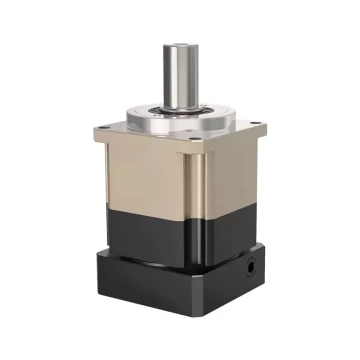
In the rapidly evolving landscape of Industry 4.0, the demand for unparalleled accuracy, repeatability, and efficiency in automated systems has never been higher. At the very core of this technological revolution lies the Speed Reducer Gearbox for Robotics and Precision Motion Control. Unlike standard industrial gearboxes, robotic speed reducers—such as harmonic drives, cycloidal (RV) reducers, and high-precision planetary gearboxes—are meticulously engineered to provide exceptionally high torque density, near-zero backlash, and extreme torsional stiffness. These attributes are non-negotiable for robotic arms that must perform delicate tasks, from micro-welding semiconductor wafers to assisting in complex surgical procedures.
The global robotics market is experiencing an unprecedented boom, largely driven by the electric vehicle (EV) manufacturing sector, e-commerce warehouse automation, and the integration of artificial intelligence in manufacturing. Consequently, the commercial landscape for precision speed reducers has transformed into a multi-billion-dollar industry. Historically, the market for high-end robotic reducers was heavily monopolized by a few elite manufacturers in Japan and Europe. However, the paradigm is shifting. As global supply chains demand more resilience and cost-effectiveness without compromising on quality, advanced engineering firms are stepping up.
Today's industrial status dictates that speed reducers account for approximately 30% to 35% of the total manufacturing cost of an industrial robot. This makes the gearbox not just a mechanical component, but a critical economic factor in automation deployment. Modern manufacturers are now leveraging advanced metallurgy, sub-micron grinding technologies, and proprietary lubrication formulations to produce speed reducers that rival legacy brands in longevity and precision, while offering superior customization for niche robotic applications.
In heavy-duty manufacturing, such as automotive assembly lines, 6-axis robots rely heavily on specialized speed reducers. The base and lower arm joints (Axes 1, 2, and 3) endure massive dynamic loads and require high rigidity. Here, Cycloidal (RV) Reducers are deployed due to their multi-tooth contact design, which absorbs shock loads up to five times the rated torque. Conversely, the wrist joints (Axes 4, 5, and 6) require extreme compactness and lightweight components to reduce inertia, making Harmonic Drives the ideal choice. The seamless integration of these gearboxes ensures fluid, precise tool-center-point (TCP) trajectories.
The logistics and warehousing sectors have been revolutionized by AMRs and AGVs. The drive wheels of these mobile robots require speed reducers that offer high efficiency to maximize battery life, coupled with a compact form factor to fit within tight chassis constraints. High-Precision Planetary Gearboxes are the standard here. They provide excellent radial load capacities to support the weight of the vehicle and its payload, while delivering smooth, low-noise power transmission essential for indoor warehouse environments.
Surgical robots demand a level of precision where human error is entirely eliminated. The speed reducers used in surgical manipulator arms must feature absolute zero backlash to ensure that the surgeon's master controls translate to exact micro-movements inside the patient. Furthermore, these gearboxes are often manufactured using advanced stainless steel alloys (similar to our SSRV series) and utilize specialized, biocompatible, and autoclavable lubricants to meet strict cleanroom and sterilization standards.
Beyond factory floors, precision motion control is vital for aerospace applications, including radar tracking arrays, satellite communication antennas, and optical targeting pods. Gearboxes in these scenarios must maintain high kinematic accuracy across extreme temperature fluctuations (from -50°C to +120°C). They are engineered with specialized thermal compensation designs and advanced sealing technologies to prevent ingress of dust, moisture, and aerospace fluids.
As we look toward the future of automation, the Speed Reducer Gearbox for Robotics is undergoing a radical technological evolution. The primary trend dominating the R&D landscape is Mechatronic Integration. Gearbox manufacturers are no longer just supplying mechanical hardware; they are developing "smart reducers." By embedding micro-torque sensors, vibration monitors, and temperature probes directly into the gearbox housing, these components can feed real-time data back to the robot's central controller. This enables AI-driven predictive maintenance, allowing operators to schedule servicing before a catastrophic failure occurs, thereby minimizing costly factory downtime.
Another significant trend is Extreme Lightweighting and Miniaturization. With the exponential rise of Collaborative Robots (Cobots), there is a critical need for robotic joints that are lighter and safer for human interaction. Engineers are exploring the use of titanium alloys, advanced carbon-fiber composites, and topology optimization in gearbox housings to drastically reduce weight while maintaining structural integrity. Furthermore, advancements in tribology are leading to the development of lubrication-free or lifetime-lubricated gearboxes, which eliminate the need for periodic oil changes, reducing maintenance costs and preventing environmental contamination in sensitive manufacturing sectors like food processing and pharmaceuticals.

A Legacy of Growth & Innovation
Our journey is one of continuous evolution and strategic expansion.
Established in 2002, we began with a clear mission: to produce gearboxes of unmatched quality and durability. Our initial focus on standardized models allowed us to build a reputation for reliability and build a solid technical foundation.
Responding to market demands, we significantly expanded our production capabilities and R&D efforts. This period saw the introduction of custom-engineered and application-specific solutions, enabling us to serve more complex industrial needs and establish long-term partnerships.
In the era of Industry 4.0, we have embraced smart manufacturing. By integrating advanced digital design tools and automated processes, we now deliver next-generation products that are smarter, more compact, and more energy-efficient, solidifying our position as an industry innovator.
We invest in world-class technology to ensure every product that leaves our facility is built to excel.
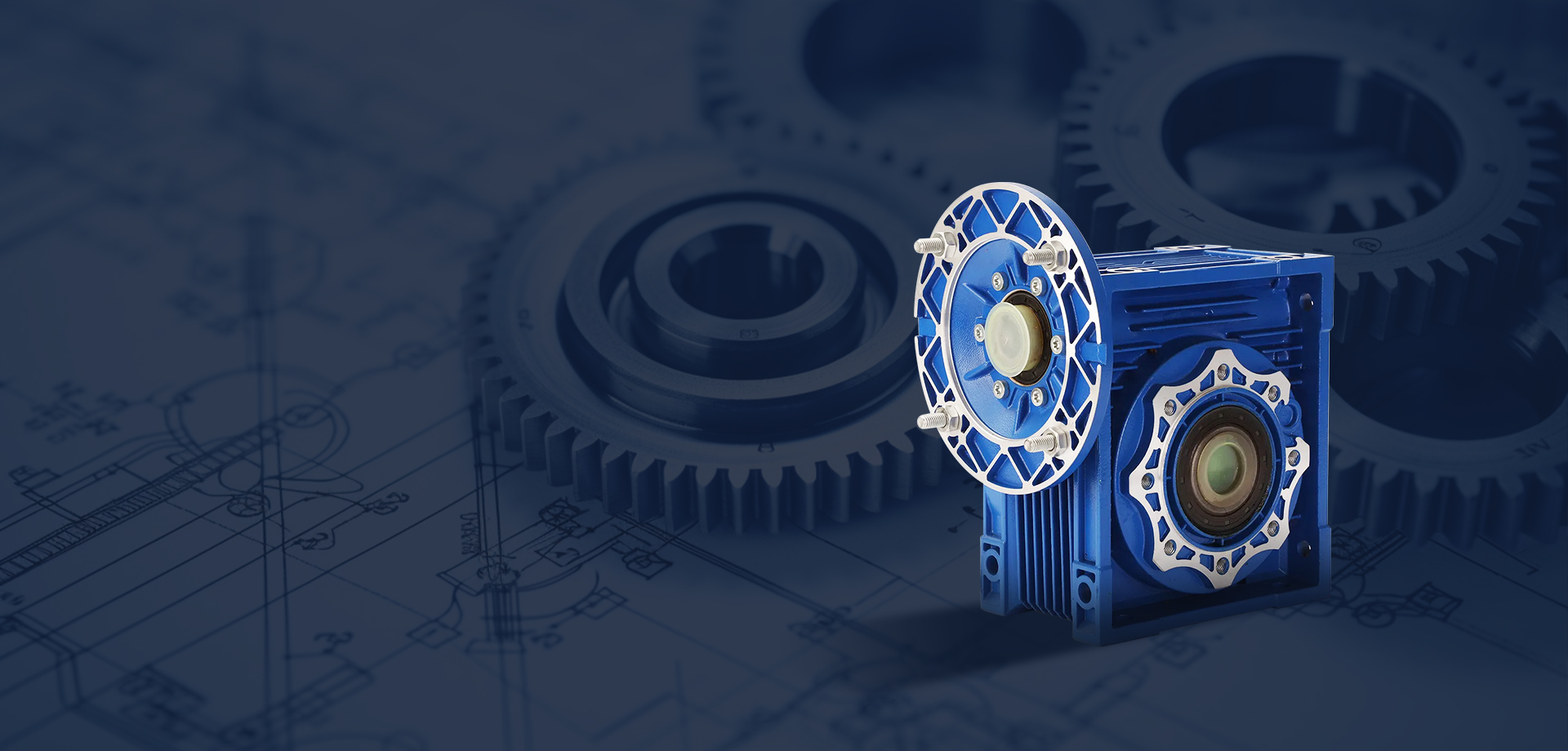
● In-process and final inspection using German-coordinate measuring machines (CMM) and gear testers, providing micron-level accuracy for critical components.
● A fully equipped metallurgical lab for material spectroscopy, hardness testing, and microstructural analysis, ensuring raw material integrity from the start.
● A dedicated full-load performance test rig simulates real-world operating conditions. Every unit undergoes rigorous testing for noise, vibration, temperature rise, and sealing before shipment, ensuring flawless performance at your site.
Quality is at the heart of everything we do
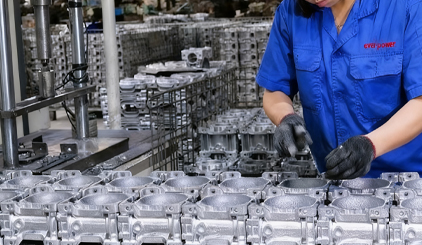

No diversions—just decades of refining helical, planetary, and parallel-shaft gearboxes for industrial applications.
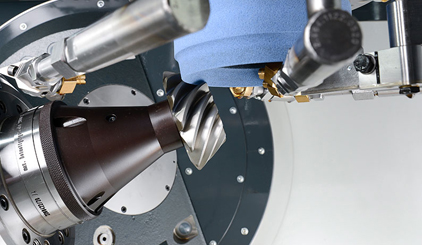

Critical processes like gear grinding, heat treatment, and housing machining are all done under one roof for consistent quality.
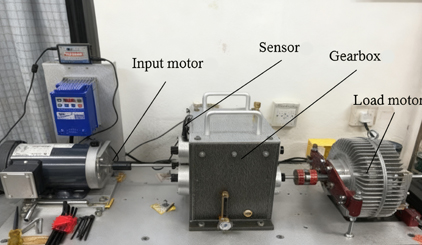

100% factory acceptance testing at rated torque with vibration, temperature, and leakage checks—test reports available on request.
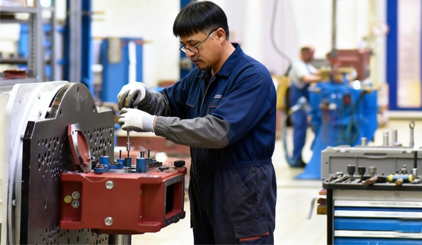

Our engineers provide prompt troubleshooting, installation advice, and maintenance recommendations in English or Chinese—because your uptime matters.