Leave Your Message
Engineered to deliver maximum power transmission and survive the most extreme operational stresses.
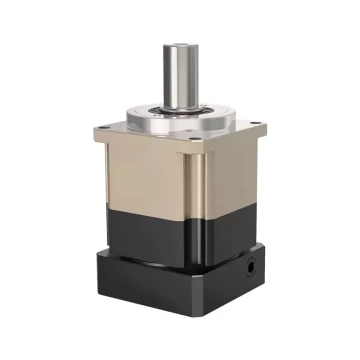
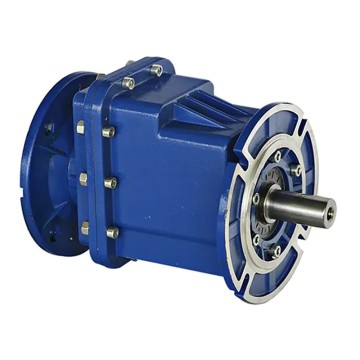
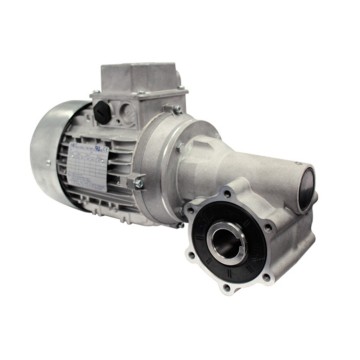
The global mining and heavy construction sectors are undergoing a massive technological shift. As surface mines run deeper and underground extraction demands higher efficiency, the machinery driving these operations must evolve. At the heart of this heavy machinery lies the power transmission system. The demand for Precision Planetary Gearboxes has surged dramatically due to their ability to deliver exceptional torque density within compact spatial constraints.
Historically, heavy equipment relied on massive parallel-shaft or spur gear reducers. While reliable, these legacy systems are heavy, occupy substantial physical space, and struggle with the dynamic, high-vibration loads typical of modern mining. Today, the industrial market demands gear systems that not only withstand brutal forces but also integrate seamlessly with variable frequency drives (VFDs) and automated control loops. Planetary gearboxes distribute the mechanical load across multiple planet gears, drastically reducing the physical footprint while offering mechanical efficiency ratings often exceeding 97%.
From a commercial perspective, the rise of mineral extraction for the green energy transition—such as copper, lithium, cobalt, and nickel—has accelerated capital investment in high-performance equipment. Operators cannot afford unplanned downtime; a single gearbox failure on a primary conveyor line or a bucket wheel excavator can cost mining operations hundreds of thousands of dollars per hour. Consequently, procurement strategies have shifted from low-cost sourcing to total cost of ownership (TCO) evaluation, positioning premium precision planetary gearboxes as the preferred standard.
To appreciate the role of a precision planetary gearbox in mining, one must understand its structural advantages. Unlike traditional helical gearboxes, a planetary system features a central sun gear, an outer ring gear, and multiple planet gears rotating on a carrier. This configuration offers several critical engineering benefits:
By distributing the load over three or more planetary gears, the contact stress at the gear teeth is minimized. This allows the gearbox to transmit immense torque while remaining up to 50% smaller and lighter than parallel-shaft units of equivalent rating.
Mining equipment constantly faces sudden shock loads when excavators hit hard rock or crushers process oversized boulders. The symmetrical load path in planetary configurations naturally balances radial forces, protecting internal bearings and shafts from premature fatigue.
Precision grinding of helical gear profiles within the planetary stages ensures minimal backlash. This is critical for automated systems and heavy-duty robotics where positioning accuracy and smooth speed regulation are non-negotiable.
To truly understand the value of precision gearboxes, we must look at how they are integrated into specific heavy machinery systems:
TBMs operate deep underground, carving through solid granite and mixed ground conditions. The cutter head of a TBM is driven by a ring of multiple planetary gearboxes working in unison. These gearboxes must handle continuous high torque at extremely low output speeds while resisting axial thrust forces from the excavation face. The planetary design allows for a modular arrangement, where multiple motor-gearbox units drive a single large internal gear, ensuring redundancy and balanced torque distribution.
Conveyor systems in mining stretch across kilometers of rugged terrain, carrying thousands of tons of ore per hour. Starting a fully loaded conveyor requires massive breakaway torque. Precision planetary gearboxes, paired with fluid couplings or variable speed drives, facilitate smooth starts and controlled deceleration. Their high thermal capacity, often enhanced with integrated cooling loops and fan shrouds, ensures they run cool under 24/7 continuous duty cycles in hot desert or deep underground environments.
Crushing and grinding are energy-intensive processes. Jaw crushers, cone crushers, and sag mills subject transmission components to extreme vibrations and cyclical shock loads. Planetary gearboxes engineered with carburized and ground gears, high-alloy steels, and specialized spherical roller bearings are uniquely qualified to survive these conditions. Advanced sealing systems (such as taconite seals) are used to prevent abrasive mineral dust from penetrating the gear housing and contaminating the lubricant.
Modern mining trucks utilize diesel-electric drivetrains where electric motors are mounted inside the wheel hubs. A compact, multi-stage planetary gearbox is integrated directly into the wheel hub assembly to multiply torque from the electric motor to the massive rubber tires. The planetary configuration is the only design capable of fitting within the tight confines of a wheel hub while transmitting the millions of Newton-meters of torque required to move a 400-ton payload up steep haul road inclines.
The future of planetary gearboxes in heavy industry is digital and sustainable. The integration of the Industrial Internet of Things (IIoT) has led to the development of Smart Gearboxes. By embedding sensors directly into the gearbox housing, operators can monitor oil temperature, vibration frequencies, shaft alignment, and acoustic emissions in real-time. Cloud-based AI algorithms analyze this data to predict mechanical failures weeks before they occur, shifting maintenance from reactive to predictive paradigms.
In materials science, advanced surface treatment technologies like plasma nitriding and Diamond-Like Carbon (DLC) coatings are being applied to gear teeth to minimize friction and wear. This extends the operational life of the gears under boundary lubrication conditions. Furthermore, the industry is witnessing a shift toward biodegradable synthetic lubricants. These eco-friendly fluids reduce the environmental footprint of mining operations in the event of a seal leak, without sacrificing the load-carrying capacity or thermal stability of the gear oil.
Finally, the drive toward carbon neutrality is pushing heavy equipment manufacturers to electrify their fleets. Electric motors operate at higher input speeds than traditional diesel engines, requiring planetary gearboxes to handle input speeds of 3,000 RPM or higher while maintaining ultra-low noise levels and high efficiency. Custom gear tooth profiles (helical-herringbone combinations) and optimized micro-geometries are designed specifically to mitigate high-frequency noise and vibration associated with high-speed electric inputs.
Mining environments are arguably the most hostile settings for mechanical equipment. A successful gearbox design must address three primary threats:
Specifying a planetary gearbox for heavy equipment requires a rigorous analysis of application parameters. Engineers must evaluate:
1. Nominal and Maximum Torque: The gearbox must handle the continuous torque rating, but more importantly, it must survive peak startup or stall torque events without yielding. A safety factor (Service Factor) of 2.0 or higher is common in heavy mining applications.
2. Radial and Axial Loads: Depending on whether the gearbox is shaft-mounted or foot-mounted, the output bearings must support significant external forces. Heavy-duty spherical or tapered roller bearings are selected to handle these combined loads.
3. Thermal Limit: The mechanical power transmitted generates heat. If the heat dissipation rate of the housing is lower than the heat generated, the oil temperature will rise, leading to oil film breakdown. Calculating the thermal limit determines if auxiliary cooling (fans, cooling coils, or external lubrication loops) is required.
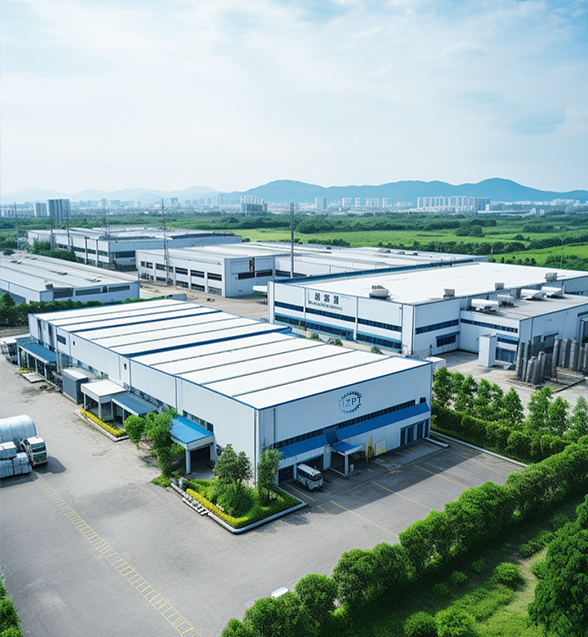
Collaborative expertise driving innovation in transmission engineering.
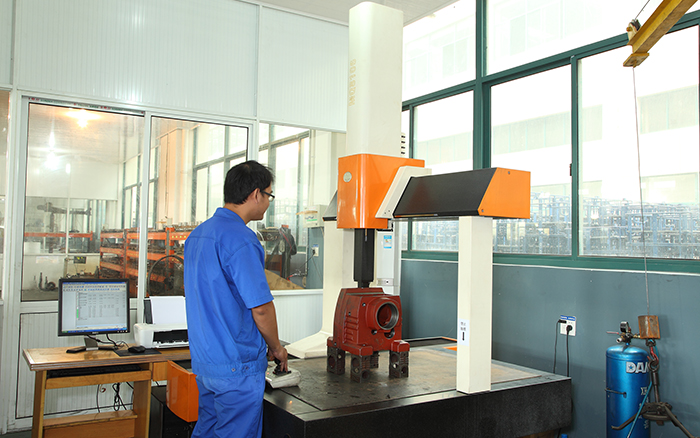
Our commitment to quality and innovation is validated by third-party accreditations and intellectual property.



Explore our full line of heavy-duty industrial planetary and helical gearboxes optimized for tough environments.