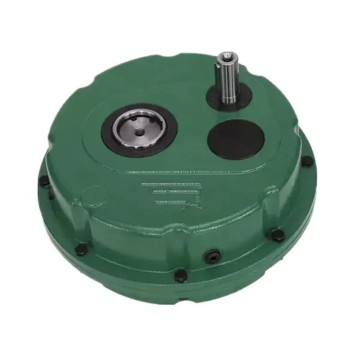
Industrial Landscape of Hollow Shaft Gearboxes in Lifting Technology
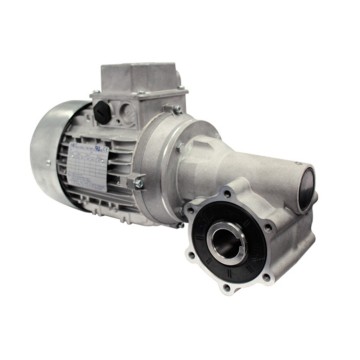
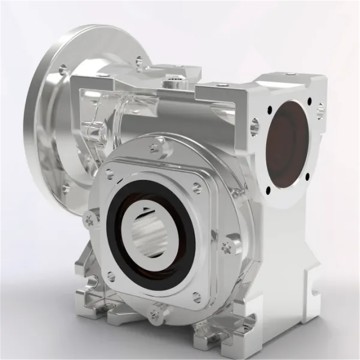
In modern industrial logistics, heavy manufacturing, and construction, the demand for space-saving, highly efficient, and reliable torque transmission has never been greater. Hollow shaft gearboxes have emerged as the standard configuration for cranes, hoists, and heavy lifting equipment. Traditionally, mechanical power transmission relied heavily on solid shaft gearboxes coupled with external couplings and complex mounting frames. However, the paradigm has shifted toward direct-drive, shaft-mounted configurations that mount directly onto the driven shaft of hoisting drums or crane travel wheels.
This design evolution is driven by the global industrial push toward compact footprints, reduced maintenance overhead, and higher safety factors. In modern overhead cranes, gantry systems, and tower hoists, space is at a premium. An integrated hollow shaft gearbox eliminates the need for flexible couplings, alignment brackets, and heavy foundations, reducing the overall weight of the trolley or hoist carriage. Consequently, this lowers structural loads, decreases energy consumption, and simplifies routine maintenance cycles.
SEO Keyword Insight: Hollow shaft gearboxes for lifting applications optimize structural efficiency by distributing torque directly to the load axis, minimizing mechanical backlash and system wear.
Key Benefits of Hollow Shaft Designs in Hoisting and Cranes
Lifting machinery operates under unique mechanical conditions characterized by frequent start-stop cycles, massive shock loads, and strict safety requirements. Hollow shaft gearboxes address these challenges through several distinct engineering advantages:
- Direct Shaft Mounting: By mounting directly onto the machine's drive shaft (e.g., the drum shaft of a winch), these gearboxes eliminate external coupling components. This minimizes alignment errors, which are a major cause of premature bearing and seal failures.
- Compact Footprint: Removing the coupling and mounting baseplate allows designers to build smaller, lighter crane trolleys. This is particularly crucial for overhead bridge cranes, where trolley weight directly impacts the sizing of the runway beams and building columns.
- Enhanced Torque Density: Engineered with high-strength alloy gears and optimized casing designs, hollow shaft reducers deliver high output torque relative to their physical volume.
- Torsional Stiffness and Low Backlash: Precise gear meshing ensures minimal rotational play. This provides smooth acceleration, deceleration, and high positioning accuracy during critical lifting operations.
- Integrated Shrink Discs: Many modern hollow shaft gearboxes utilize shrink discs or keyless locking assemblies. This ensures a secure, zero-backlash connection capable of handling alternating heavy load cycles without slipping.
Deep Application Scenarios in Lifting Systems
1. Overhead Bridge and Gantry Cranes
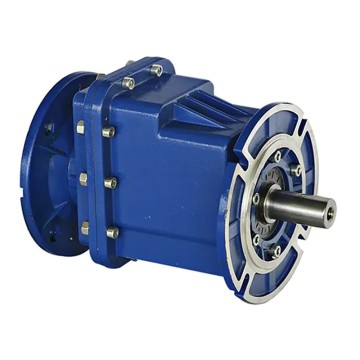
In heavy steel mills, automotive assembly plants, and shipyards, overhead cranes run continuously under extreme thermal and mechanical loads. Hollow shaft helical-bevel or parallel-shaft gearboxes are typically utilized for both the main hoist drum drive and the trolley travel drives. By mounting the gearbox directly onto the drum shaft, the drive package remains compact. This allows the crane trolley to travel closer to the ends of the bridge, maximizing the hook coverage area within the facility.
2. Construction Hoists and Tower Cranes
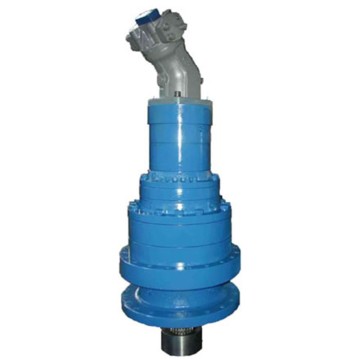
Tower cranes require precise speed control and high reliability at extreme heights. The hoist drive must control heavy loads smoothly during lifting and lowering. Hollow shaft planetary gearboxes are highly valued in these applications due to their high reduction ratios and compact coaxial configurations. They fit neatly inside the hoist drum, protecting the drive components from harsh environmental conditions while saving valuable space on the crane's jib.
3. Heavy-Duty Winches and Marine Lifting Gear
Marine environments require robust, corrosion-resistant drive systems. Hollow shaft gearboxes designed for marine winches feature specialized sealing systems and high-grade surface coatings. The direct-mount design prevents water ingress at coupling interfaces and ensures reliable performance under the dynamic shock loads caused by wave action during offshore lifting operations.
Future Technical Trends: Smart Monitoring and High Efficiency
The industrial transmission market is rapidly adopting Industry 4.0 technologies. Modern hollow shaft gearboxes are increasingly equipped with integrated sensors that monitor oil temperature, vibration levels, and rotational speed. This data enables predictive maintenance, allowing operators to address potential issues before they cause costly downtime or safety hazards on site.
Furthermore, there is a strong focus on improving gear efficiency. By using advanced gear grinding techniques, synthetic lubricants, and low-friction seals, manufacturers are reducing internal power losses. This helps industrial operators meet strict energy efficiency regulations while lowering the total cost of ownership.