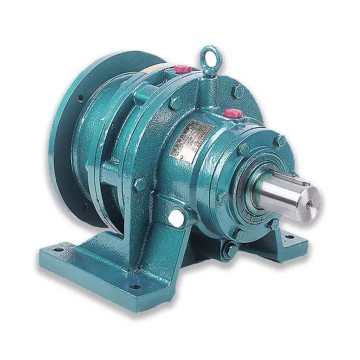
The Vanguard of Precision: Understanding Harmonic Reducers in Modern Machinery
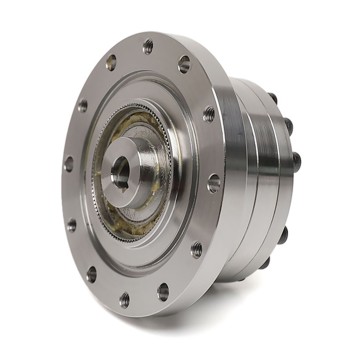
The landscape of industrial automation is undergoing a seismic shift, driven by the relentless pursuit of precision, efficiency, and miniaturization. At the very heart of this mechanical revolution lies the Harmonic Reducer (also known as strain wave gearing). Unlike traditional gearboxes that rely on standard spur or planetary gear mechanisms, the harmonic reducer operates on a highly sophisticated principle involving elastic dynamics and metal fatigue resistance. Comprising three fundamental components—the wave generator, the flexspline, and the circular spline—this ingenious mechanism allows for exceptionally high gear reduction ratios within an incredibly compact and lightweight footprint.
For Industrial Automation and Machinery, the primary allure of the harmonic reducer is its capability to achieve zero backlash. Backlash, the slight clearance or play between mating gear teeth, is the nemesis of precision engineering. In applications where microscopic accuracy is non-negotiable—such as semiconductor wafer handling or multi-axis robotic articulation—even a fraction of a millimeter of mechanical play can lead to catastrophic manufacturing defects. By utilizing a flexible steel cup (the flexspline) that continuously deforms to engage with the outer rigid ring (the circular spline), harmonic reducers ensure that multiple teeth are engaged simultaneously. This not only eradicates backlash but also provides immense torsional stiffness and superior torque-to-weight ratios, setting the gold standard for motion control in the 21st century.
Furthermore, the unique kinematic motion of harmonic drives results in remarkably smooth operation with minimal vibration. This characteristic is particularly critical in modern machinery where high-speed, repetitive tasks must be executed flawlessly over millions of cycles. The inherent design also allows for coaxial input and output shafts, simplifying the overall architectural design of automated machinery and enabling engineers to build sleeker, more aerodynamic robotic systems.
Current Commercial & Industrial Landscape
The global market for harmonic reducers is experiencing exponential growth, primarily fueled by the advent of Industry 4.0 and the widespread integration of automated systems across diverse manufacturing sectors. Historically, the production of high-precision strain wave gears was monopolized by a few key players due to the extreme metallurgical and machining challenges involved in manufacturing the flexspline. However, the current commercial landscape is witnessing a dynamic shift. With advancements in CNC machining, materials science, and heat treatment processes, a new wave of highly capable manufacturers—like our enterprise—has emerged, democratizing access to top-tier motion control components.
From a commercial standpoint, the demand for Harmonic Reducers for Industrial Automation is deeply intertwined with the robotics boom. According to recent industrial reports, the compound annual growth rate (CAGR) for precision gearboxes in robotics is projected to remain in the double digits over the next decade. This surge is not limited to traditional automotive assembly lines; it is aggressively expanding into consumer electronics manufacturing, logistics and warehousing automation, and even food processing. Factories are actively transitioning from rigid, single-purpose machinery to flexible, programmable robotic cells, necessitating thousands of compact, high-torque reducers.
Economically, the integration of high-quality harmonic reducers represents a strategic investment in Total Cost of Ownership (TCO). While the initial procurement cost of precision gearboxes may be higher than standard alternatives, the dramatic reduction in maintenance downtime, the elimination of calibration errors, and the extended lifecycle of the machinery yield an exceptional Return on Investment (ROI). Modern industrial buyers are increasingly prioritizing reliability and precision over baseline costs, driving a continuous commercial preference for harmonic and high-end planetary solutions.
Deep Dive: Application Scenarios in Industrial Automation
The most prominent application for harmonic reducers is within the joints of 6-axis articulated robots and collaborative robots (Cobots). In traditional heavy-duty robots, harmonic drives are typically utilized in the "wrist" joints (Axes 4, 5, and 6) where space is severely constrained, but high positional accuracy is required for tasks like arc welding or precise pick-and-place operations. However, with the rise of Cobots designed to work safely alongside humans, weight reduction is paramount. Harmonic reducers provide the necessary torque without the bulk, enabling Cobots to maintain a sleek, lightweight profile. Their zero-backlash nature ensures that the robot's end-effector reaches its exact programmed coordinate every single time, a critical factor in intricate assembly tasks.
2. High-Precision CNC Machining & Indexing Tables
In the realm of Computer Numerical Control (CNC) machinery, harmonic and high-precision planetary reducers are heavily deployed in rotary indexing tables and tool changers. When a multi-axis CNC machine is milling complex aerospace components or medical implants, the workpiece must be rotated and locked into position with arc-second accuracy. Harmonic reducers facilitate this exact positioning. The immense torsional rigidity ensures that the cutting forces exerted by the milling tool do not cause the indexing table to deflect, thereby maintaining the strict geometric tolerances required in advanced manufacturing.
3. Semiconductor Manufacturing Equipment
The semiconductor industry operates in vacuum environments where microscopic particulate contamination can ruin entire batches of silicon wafers. Harmonic reducers are ideal for wafer handling robots because they can be engineered with specialized vacuum-compatible lubricants and sealed designs that prevent outgassing. Furthermore, the smooth, vibration-free motion of the strain wave gear prevents delicate silicon wafers from being jarred or damaged during transport between chemical vapor deposition (CVD) chambers and lithography stations.
4. Medical Automation & Surgical Robotics
Beyond traditional factory floors, industrial automation technologies are revolutionizing healthcare. Robotic surgical assistants rely extensively on miniature harmonic reducers to translate the macro-movements of a surgeon's hands into micro-movements inside the patient's body. The absolute lack of backlash is quite literally a matter of life and death, ensuring the surgical instruments respond instantaneously and accurately without any mechanical hesitation.
Future Development Trends: Smart Reducers & Industry 5.0
As we look toward the horizon of Industry 5.0—where human-centric design, sustainability, and advanced AI converge—the harmonic reducer is evolving from a purely mechanical component into a "smart" mechatronic node. One of the most significant development trends is the integration of built-in sensor technology. Future harmonic reducers will feature embedded piezoelectric strain gauges, thermal sensors, and vibration monitors directly within the circular spline or housing. These sensors will continuously stream real-time operational data to industrial IoT (Internet of Things) platforms.
This data will power AI-driven predictive maintenance algorithms. Instead of replacing a gearbox based on a rigid, time-based maintenance schedule, factory operators will be alerted exactly when a specific reducer is showing early signs of metal fatigue or lubrication degradation. This shift will drastically reduce unexpected downtime and optimize the lifespan of the machinery.
Additionally, advancements in materials science are pushing the boundaries of what these reducers can achieve. We are seeing research into advanced titanium alloys, carbon-fiber reinforced composites, and novel heat-treatment methodologies that promise to make the flexspline even more resilient to fatigue while shedding further weight. As miniaturization continues, we will see micro-harmonic drives powering autonomous drones, advanced prosthetics, and even micro-manufacturing robots, solidifying the harmonic reducer's role as the indispensable muscle of future automation.
H Z P T
Corporate History
A Legacy of Growth & Innovation
Our journey is one of continuous evolution and strategic expansion.
Foundation & Focus (2002-2010)
Established in 2002, we began with a clear mission: to produce gearboxes of unmatched quality and durability. Our initial focus on standardized models allowed us to build a reputation for reliability and build a solid technical foundation.
Expansion & Diversification (2011-2018)
Responding to market demands, we significantly expanded our production capabilities and R&D efforts. This period saw the introduction of custom-engineered and application-specific solutions, enabling us to serve more complex industrial needs and establish long-term partnerships.
Innovation & Leadership (2019-Present)
In the era of Industry 4.0, we have embraced smart manufacturing. By integrating advanced digital design tools and automated processes, we now deliver next-generation products that are smarter, more compact, and more energy-efficient, solidifying our position as an industry innovator.
Manufacturing & Quality
We invest in world-class technology to ensure every product that leaves our facility is built to excel.
Testing & Inspection
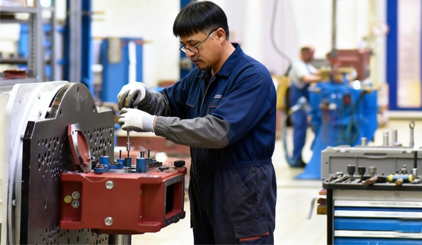
In-process and final inspection using German-coordinate measuring machines (CMM) and gear testers, providing micron-level accuracy for critical components.
A fully equipped metallurgical lab for material spectroscopy, hardness testing, and microstructural analysis, ensuring raw material integrity from the start.
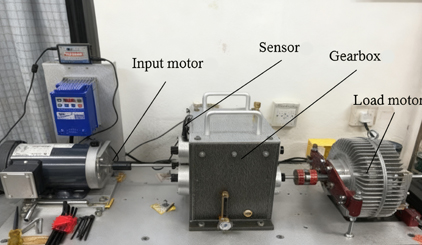
A dedicated full-load performance test rig simulates real-world operating conditions. Every unit undergoes rigorous testing for noise, vibration, temperature rise, and sealing before shipment, ensuring flawless performance at your site.
Why Choose Us?
Quality is at the heart of everything we do
30+ Years Dedicated to Gearbox Manufacturing Only
No diversions—just decades of refining helical, planetary, and parallel-shaft gearboxes for industrial applications.
Full In-House Production: From Gear Forging to Final Assembly
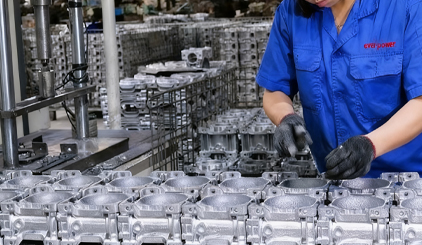
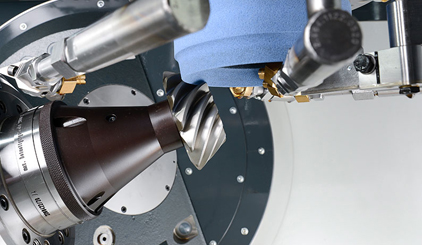
Critical processes like gear grinding, heat treatment, and housing machining are all done under one roof for consistent quality.
Every Unit Load-Tested Before Shipment
100% factory acceptance testing at rated torque with vibration, temperature, and leakage checks—test reports available on request.
Responsive After-Sales Support with Technical Guidance
Our engineers provide prompt troubleshooting, installation advice, and maintenance recommendations in English or Chinese—because your uptime matters.